Shore Power
CII 2026-2030: A Retrofit Roadmap for Mid-Age Bulk Carriers
A phased CII retrofit roadmap for mid-age bulk carriers: EEXI/CII baseline, pre-swirl Eco-Stator and Semi-Duct devices with 3-10% fuel saving, CFD-optimised design and 4-5 day dock installation.
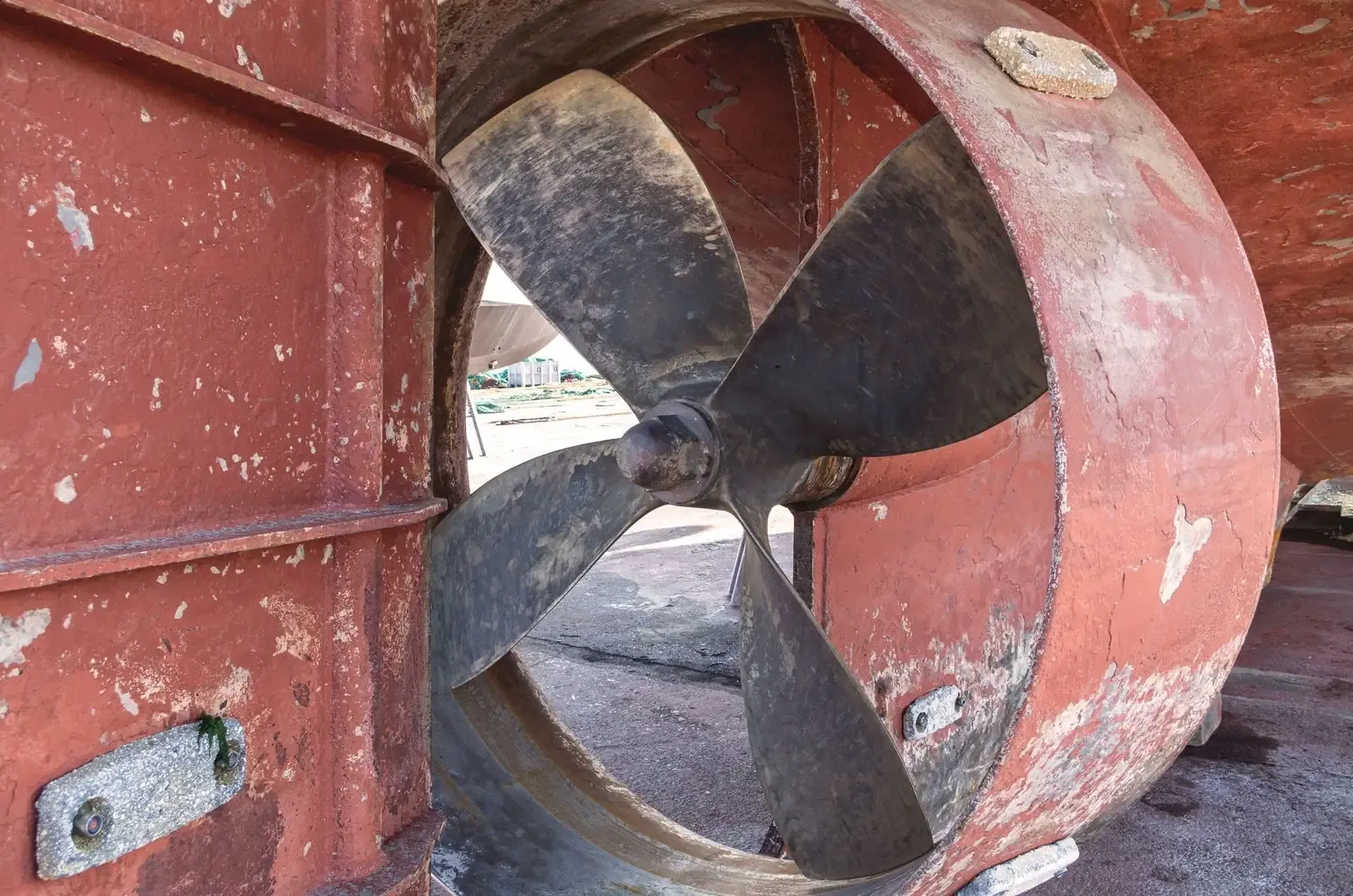
Mid-age bulk carriers sit in the uncomfortable middle of the CII squeeze: too young to scrap on schedule, too old to fix with a newbuild order. From 2023 onward their Carbon Intensity Indicator rating tightens every year, and from 2026 the reduction factor reaches 11% - with carbon pricing anticipated from 2030 on top. A retrofit roadmap that fits between two port calls is no longer a nice-to-have; it is the plan that keeps a 12-year-old bulker charterable.
This roadmap lays out what a bulk carrier owner can do in phases: measure first, fit proven energy saving devices at the next docking, and document the improvement so the rating - and the charter market - reflects it.
Why the CII Clock Punishes Mid-Age Fleets
The CII rating compares a ship's transport work against its CO2 output, and the required reduction factor tightens by two percentage points every year - the 2026 factor is 11% against the 2019 reference line. Older bulk carriers carry inherent disadvantages: hull roughness, older engines and propellers designed to earlier standards. Doing nothing means a D or E rating within a few assessment years, and a D/E rating triggers a corrective action plan in the ship's SEEMP - visible to charterers, banks and inspectors alike.
The retrofit window is the answer. Unlike a newbuild decision, an energy saving device installation fits into an already-planned special survey or dry-docking - typically 4-5 days in dock for a pre-swirl device.
Phase 1: Measure - the EEXI and CII Baseline
Every credible roadmap starts with the vessel's own data: hull form, service speed, engine load profile, propeller dimensions and the actual trading pattern. We collect the ship data, run EEXI and CII calculations and establish the baseline rating trajectory - what the vessel scores today, and what it scores in 2027 and 2030 if nothing changes. Only then does a device conversation make sense, because the size of the gap decides the size of the intervention.
The baseline also protects the budget: if the data shows the vessel reaching its 2030 requirement with a modest 3-4% fuel saving, a full package is overkill; if the gap is wider, a staged plan beats a single gamble.
Phase 2: Fit - Pre-Swirl Energy Saving Devices
For bulk carriers the highest-value devices work at the propeller. Two options cover the range:
Eco-Stator pre-swirl - four to five stator fins fitted radially around the stern tube, rectifying stern flow to increase propeller thrust at unchanged RPM. Lightweight, simple installation, about 4 days in dock. Fuel saving across the operating profile: 3-10%.
Semi-Duct - the same pre-propeller principle with a wider applicability across vessel sizes, delivering higher efficiency on large vessels. 4-5 days in dock.
Both are engineered per vessel: the design is optimised with CFD (Fluent, STAR-CCM+, OpenFOAM) against your hull and propeller data, so the quoted saving is a modelled expectation for your ship - not a brochure average.
Phase 3: Document - Making the Rating Stick
A retrofit only improves the CII rating if the improvement is documented the way class and charterers expect: EEXI re-assessment files, the updated SEEMP with the device's modelled contribution, and installation records from the docking. We support the engineering analysis and the documentation package alongside the equipment supply - the same class-documentation discipline applied across our product range, with type approval documents from CCS, ABS, LR, DNV and BV.
A 2026-2030 Roadmap on One Page
1. 2026: data collection and EEXI/CII baseline - establish the gap and the trajectory.
2. 2027: CFD-optimised device selection and engineering - Eco-Stator or Semi-Duct, quoted with a modelled saving for the specific hull.
3. 2028: installation at the planned special survey - 4-5 days in dock, no off-hire beyond the docking window.
4. 2029: post-installation verification against the modelled saving, SEEMP update and re-assessment file.
5. 2030: the vessel meets the tightened factor with the carbon-pricing era already priced in.
Equipment for the roadmap ships on a schedule owners can plan around: standard items in 15-25 working days, customized builds in 30-45, with no strict MOQ. Recent marine equipment deliveries include projects in Russia, Singapore and Bangladesh.
FAQ
Which bulk carriers benefit most from a pre-swirl retrofit?
Mid-age vessels (roughly 8-15 years old) with stable trading patterns see the clearest payback: enough remaining life to amortise the device, and enough CII exposure ahead to justify acting now.
How much fuel can an energy saving device actually save?
Modelled savings fall in the 3-10% range depending on hull form, propeller loading and service profile. The CFD study against your vessel's data produces the vessel-specific number before you commit.
How long does the installation take?
About 4 days in dock for an Eco-Stator and 4-5 days for a Semi-Duct - planned into an already-scheduled special survey, not an extra off-hire.
What documentation comes with the retrofit?
EEXI and CII calculation files, the CFD study, installation records and - across the equipment range - type approval documents from CCS, ABS, LR, DNV and BV.
How fast can the equipment ship once the design is fixed?
Standard items ship in 15-25 working days; customized builds in 30-45. Deliveries include projects in Russia, Singapore and Bangladesh.
Planning a CII retrofit for a bulk carrier fleet? Request a Quote - engineers reply within 24 hours with the baseline study scope and a device quotation.