Oct 20, 2026Shore Power
Shore Power for Fishing Vessels, Tugs and Workboats: A Practical LV Guide
What low voltage shore connection (LVSC) means for fishing vessels, tugs and workboats: sizing to peak at-berth load, the four-component reception train, retrofit scope and what class survey expects.
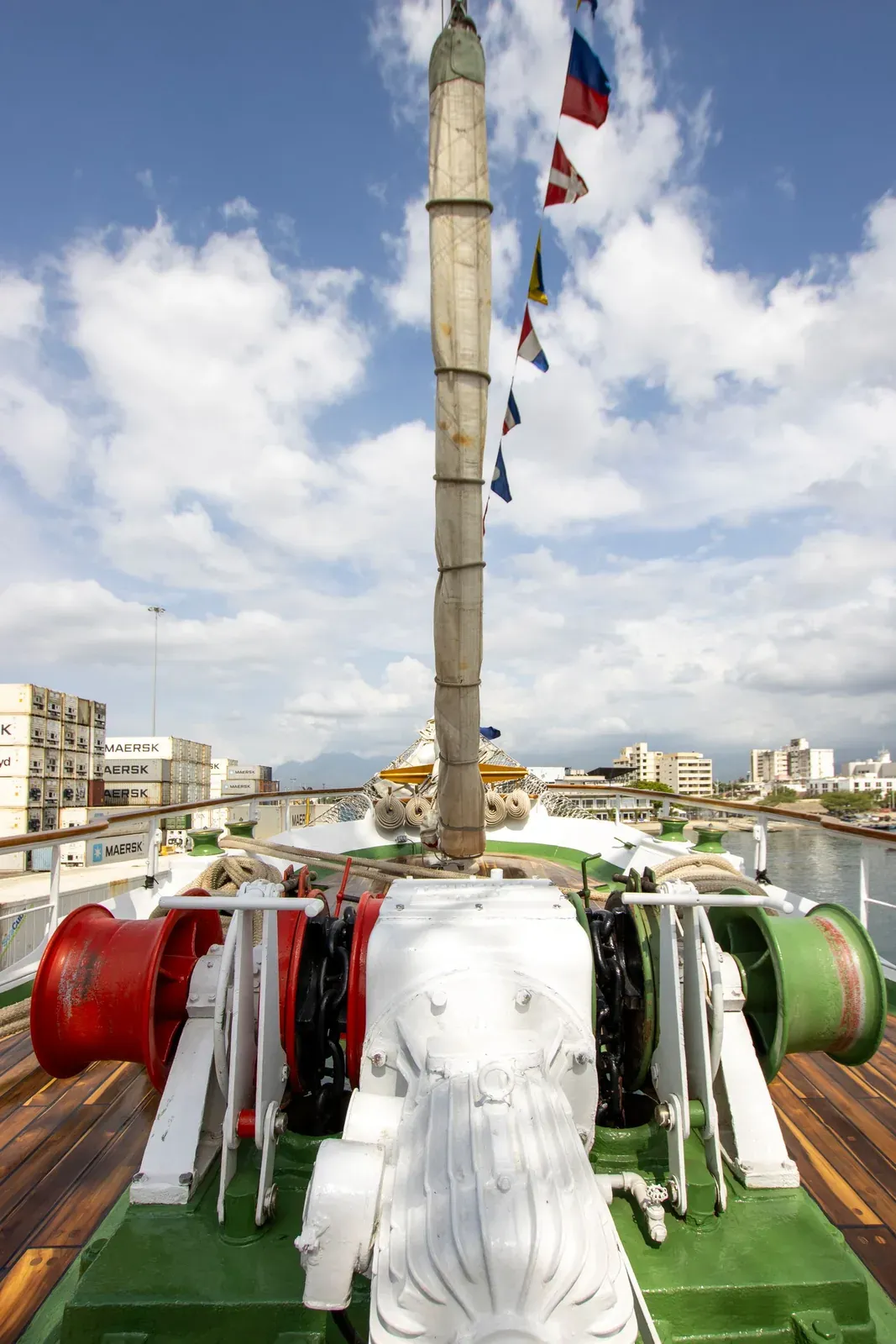
Fishing vessels, tugs, harbour craft and small workboats spend a large share of their service life alongside. Yet on most of these hulls, every berthed hour still runs on a diesel auxiliary set: lighting, heating, ventilation, the galley, battery charging, and on fishing vessels the fish-room refrigeration as well. A low voltage shore connection replaces that running engine with grid power, and on small craft it is one of the few retrofits that pays back in fuel, service hours and crew comfort at the same time.
This guide walks through what shore power means for a workboat specifically: why small craft feel the economics first, how the IEC/IEEE 80005 family separates LV from HV, which components make up the reception train, and what a class survey expects from a retrofit.
Why Small Craft Feel the Economics First
The argument for shore power is strongest where the berth-time ratio is highest. Ocean-going ships may spend weeks at sea between connections; a fishing vessel working a seasonal ground, a harbour tug or a survey craft may berth every single night. Every one of those nights is auxiliary running hours — fuel burned at low load where small gensets are least efficient, plus the maintenance intervals those hours consume.
There is a regulatory direction behind the economics. From 1 January 2030, FuelEU Maritime requires containerships and passenger ships to use shore power or zero-emission technology at berth, and port-level rules on berthed emissions keep spreading from container terminals toward city-front harbours where fishing fleets and tugs actually moor. Owners who wire shore power in now are ahead of both the fuel bill and the local rules.
LV or HV: The Standard Already Sorts It
The IEC/IEEE 80005 family does the sorting for you. High voltage shore connection (HVSC) per IEC/IEEE 80005-1 serves multi-megawatt at-berth demand — large containerships and cruise vessels drawing on 6.6 to 15 kV equipment. That is not the workboat world. Low voltage shore connection (LVSC) per IEC/IEEE 80005-3 covers equipment rated 63–350 A, which matches at-berth loads measured in tens of kilowatts: exactly the fishing vessel, tug and workboat range.
The practical consequence: a small-craft shore power project is an LV project end to end — reception box, plug and socket set, and cable management, all on a 400 V-class infrastructure that ordinary yard electricians can install and maintain.
The Component Train on a Small Hull
Shore power on a workboat is a train of four elements, and they have to be specified together:
1. Shore power connection box — the panel where grid power crosses into the ship, IP66 for exposed decks, with a ship-shore interlock and an emergency stop so power transfer cannot follow an unsafe sequence.
2. Plug and socket set — dimensioned to the international shore power interface. A non-standard interface strands the vessel at every other equipped berth, so this is not a place to economize.
3. Cable management — a fixed cable tail or a cable reel that stores and pays out the shore cable. On operating decks where space is tight and decks stay wet, a reel keeps the connection tidy and the cable out of the crew's way.
4. Switchboard integration — the shore supply feeds the main switchboard with a changeover so shore and generator power can never be paralleled unintentionally.
Sizing is where most owners get it wrong the first time. Size to the peak at-berth load, not the average: fish-room refrigeration is the single large load on many fishing hulls, and heating, HVAC startup, the galley, workshop tools, winch heaters and battery chargers stack on top of it. The connection box rating is selected with margin above that calculated peak.
Retrofit Scope and What Survey Looks For
The standard retrofit scope on an existing hull is the box, the matching plug and socket set, cable management and the switchboard changeover — surveyed against class rules. The survey concentrates on the load calculation, the changeover interlocking between shore and generator power, cable routing and entries, and protective earthing. None of this requires docking; most of the work sits above deck and behind one switchboard.
On a newbuild, the only difference is when the decisions are made. Reserving space for the box, the cable entry and the reel at the design stage costs nothing; retrofitting the same space later costs a redesign. Either way, the equipment should arrive with type approval documents covering the exact rated frame from CCS, ABS, LR, DNV and BV — an approval for the product family is not an approval for your rating.
FAQ
What rating does a fishing vessel or tug actually need?
Run the at-berth load calculation first. Loads in the tens of kilowatts point to LV equipment in the 63–350 A range per IEC/IEEE 80005-3; multi-megawatt demand — which small craft do not have — is where HV begins.
Can the shore connection charge the vessel's battery packs?
Yes. The shore supply feeds the main switchboard, and the battery chargers draw from there like any other load. The chargers simply join the peak load calculation that sizes the connection box.
How fast can standard LV shore power equipment ship?
Standard items ship in 15–25 working days with no MOQ; customized builds run 30–45 working days. Recent shore power deliveries include projects in Russia, Singapore and Bangladesh.
Do you supply the whole LV set or only the box?
The full train: shore power connection box, matching plug and socket set, and cable reels — specified as one compatible system. Port-side connection cabinets and quay sockets are quoted as a package on request.
Wiring shore power into a fishing fleet, a tug or a workboat? Request a Quote — engineers reply within 24 hours with type approval documents.